Future of Automotive Industry and Global Mobility Shift

Future of Automotive Industry and Global Mobility Shift
Future of Automotive Industry and Global Mobility Shift defines the structural transformation of transportation systems through electrification, autonomous systems, software defined architecture, connected ecosystems, sustainable manufacturing, and reconfigured ownership models that collectively redefine industrial power, capital allocation, and competitive hierarchy.
Electrification as Industrial Foundation
Platform Reengineering and Battery Dominance
Electrification is not a product trend but an architectural reset. Vehicle platforms transition from engine centric layouts to skateboard structures integrating battery packs as structural components. This shift alters weight distribution, crash dynamics, thermal management, and assembly logic.
Battery chemistry becomes central to cost control and range performance. Lithium iron phosphate cells gain adoption due to stability and reduced reliance on scarce metals, while high nickel chemistries pursue energy density expansion. Solid state research continues in laboratory and pilot scale environments with commercialization dependent on yield stability and cost scaling.
Manufacturers commit capital to battery joint ventures and internal cell production. Companies such as Tesla integrate battery development directly into vehicle engineering strategy. Industrial groups including Volkswagen Group construct gigafactories to secure supply and reduce dependency. Chinese manufacturers like BYD align vehicle and battery manufacturing under unified control.
Electrification restructures supplier networks. Combustion engine component suppliers face contraction, while power electronics and battery management firms gain strategic relevance. Thermal management, inverter efficiency, and charging optimization become engineering focal points.
Charging Infrastructure and Energy Convergence
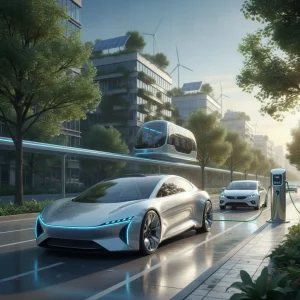
Charging infrastructure density dictates adoption viability. Urban charging solutions require integration into residential buildings and commercial parking systems. Highway corridors demand high power fast charging installations capable of reducing downtime.
Grid integration becomes strategic. Vehicle to grid capabilities allow electric vehicles to function as distributed energy storage assets. Utilities coordinate load balancing through smart charging algorithms. Renewable energy intermittency increases reliance on distributed storage networks.
Energy companies expand into mobility ecosystems. Partnerships between automakers and energy providers redefine value chains. Charging networks such as those supported by IONITY illustrate cross manufacturer collaboration to scale infrastructure.
Electrification extends beyond passenger vehicles into commercial fleets, buses, and last mile delivery. Fleet operators evaluate total cost of ownership under fluctuating fuel prices and regulatory emissions pressure.
Software Defined Architecture and Artificial Intelligence

Centralized Computing and Continuous Updates
The Future of Automotive Industry and Global Mobility Shift accelerates the transition toward centralized computing architectures. Distributed electronic control units consolidate into domain controllers governed by high performance processors. Software becomes primary differentiator rather than mechanical refinement.
Over the air updates modify performance parameters, energy efficiency algorithms, and infotainment capabilities without physical recall. This dynamic capability alters lifecycle economics. Vehicles evolve after purchase through digital updates.
Semiconductor providers such as NVIDIA deliver automotive grade compute platforms optimized for artificial intelligence workloads. Cloud infrastructure companies like Amazon Web Services provide backend systems for data processing and fleet analytics.
Software validation becomes continuous rather than episodic. Cybersecurity design integrates secure boot protocols, encryption layers, and intrusion detection systems. Regulatory frameworks increasingly require proof of digital resilience.
Autonomous Systems and Sensor Fusion
Autonomous capability development progresses across incremental levels of automation. Advanced driver assistance systems transition into supervised autonomy within constrained domains. Full autonomy remains geographically limited due to regulatory and environmental complexity.
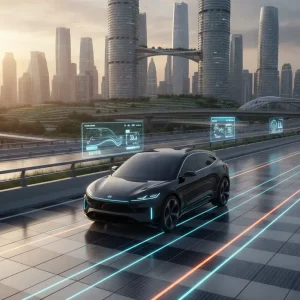
Sensor fusion integrates lidar, radar, camera, and ultrasonic inputs. Machine learning models interpret environmental data in real time. Edge computing ensures low latency response.
Companies such as Waymo test autonomous ride services in restricted urban zones. Technology conglomerates including Baidu expand autonomous pilot programs within defined ecosystems.
Autonomy redefines vehicle interior design, liability structures, and insurance modeling. Legal frameworks must allocate responsibility between manufacturer, software provider, and operator. Insurance products adapt to algorithmic risk assessment.
Artificial intelligence extends beyond navigation. Predictive maintenance models anticipate component failure. Personalized user interfaces adjust cabin environment based on biometric and behavioral data.
Connected Ecosystems and Data Monetization
Vehicle as Data Node
Connected vehicles function as mobile data generators. Telematics capture driving patterns, battery health metrics, and system diagnostics. Aggregated fleet data informs product improvement and service optimization.
Insurance firms integrate telematics into risk modeling. Usage based insurance calculates premiums dynamically according to driving behavior. Data sharing agreements determine revenue allocation between automakers and insurers.
Digital platforms transform infotainment systems into application ecosystems. App integration replicates smartphone operating models. Revenue sharing agreements create recurring income streams beyond initial sale.
Cloud connectivity enables remote diagnostics and fleet management dashboards. Commercial operators track vehicle utilization and maintenance cycles in real time. Downtime reduction becomes measurable economic advantage.
Privacy regulation governs data governance structures. Compliance with regional frameworks influences system design. Consumer trust determines adoption willingness. Transparent data policies mitigate reputational risk.
Digital Retail and Direct Sales
Traditional dealership models confront digital retail transformation. Direct to consumer sales channels expand, reducing intermediary layers. Online configuration tools, remote financing approval, and digital documentation streamline purchase processes.
Companies such as Rivian implement direct sales strategies integrated with digital ecosystems. Mobility platforms like Uber influence consumer perception of vehicle ownership versus access.
Subscription models enable flexible vehicle access without long term ownership commitment. Fleet based subscription services align with urban mobility trends. Residual value modeling becomes more complex due to rapid technological evolution.
Connected ecosystems integrate charging, maintenance scheduling, insurance, and navigation within unified digital platforms. Brand loyalty shifts from mechanical reliability toward ecosystem integration quality.
Sustainable Manufacturing and Circular Systems

Decarbonized Production Networks
Industrial sustainability extends beyond vehicle emissions to full lifecycle assessment. Manufacturing plants integrate renewable energy sources to reduce embedded carbon. Energy intensive processes such as paint shops undergo efficiency upgrades.
Manufacturers publish decarbonization roadmaps. Corporate sustainability commitments from firms like Volvo Cars outline carbon neutrality targets across supply chains. Industrial groups including General Motors integrate electrification goals with manufacturing transformation.
Supply chain transparency increases through digital traceability platforms. Raw material sourcing verification addresses environmental and labor standards. Blockchain documentation attempts to ensure mineral origin integrity.
Battery Recycling and Resource Circularity
Battery recycling infrastructure expands to recover lithium, cobalt, and nickel. Hydrometallurgical processes reduce environmental impact relative to traditional smelting. Closed loop supply chains reintroduce recovered materials into new cell production.
Second life applications for used batteries support stationary storage systems. Renewable energy projects integrate repurposed modules to stabilize grid output.
Circular economy principles reduce reliance on virgin extraction. Remanufacturing and refurbishment extend component lifespan. Regulatory frameworks increasingly mandate producer responsibility for end of life management.
Lightweight materials adoption reduces operational energy consumption. High strength steel and aluminum alloys balance structural safety with efficiency targets.
Geopolitical Realignment and Industrial Policy
Regionalization of Production
Globalization efficiency is recalibrated against geopolitical risk. Trade tensions, export controls, and tariff structures influence sourcing decisions. Manufacturers diversify production footprints to reduce concentration risk.
North American, European, and Asian markets pursue domestic capacity expansion in semiconductors and batteries. Industrial policy aligns with energy security and strategic autonomy objectives.
Institutions such as the European Commission promote regional manufacturing initiatives supporting clean mobility transition. National incentives attract gigafactory investments.
Semiconductor and Strategic Technology Control
Advanced semiconductor fabrication becomes national security priority. Export restrictions affect technology transfer and equipment access. Automotive manufacturers dependent on high performance chips must adapt procurement strategies accordingly.
Strategic alliances form between automakers and semiconductor firms to ensure priority allocation. Vertical integration efforts attempt to internalize chip design expertise.
Geopolitical fragmentation influences supply chain resilience planning. Risk weighted sourcing models incorporate political stability, regulatory predictability, and infrastructure robustness.
Financial volatility intersects with policy uncertainty. Capital allocation decisions must account for long term regulatory trajectories.
Workforce Transformation and Skill Migration
Mechanical engineering dominance declines relative to software, data science, and battery chemistry expertise. Workforce reskilling initiatives attempt to align talent with digital mobility requirements.
Automation in manufacturing increases robotics deployment but also increases demand for technical maintenance specialists. Educational institutions collaborate with industry to update curricula.
Competition for artificial intelligence and semiconductor engineering talent intensifies across sectors. Automotive firms compete directly with technology companies for recruitment.
Organizational culture shifts from hierarchical production planning toward agile cross functional collaboration. Development cycles shorten. Iterative design replaces sequential stage gate models.
Financial Architecture and New Revenue Logic
Revenue composition transitions from one time vehicle sale to recurring digital services. Subscription features, connectivity packages, and software upgrades generate lifecycle income.
Valuation metrics increasingly reflect technology orientation rather than manufacturing scale alone. Investors assess software capability, data assets, and ecosystem integration strength.
Capital expenditure requirements escalate due to battery plants, semiconductor partnerships, and charging infrastructure investments. Joint ventures distribute financial risk.
Fleet electrification by corporate buyers creates large volume contracts but compresses margins. Total cost of ownership analysis becomes primary purchasing criterion.
Insurance products adapt to autonomous and connected systems. Algorithmic risk modeling influences premium calculation.
Structural Redefinition of Mobility

The Future of Automotive Industry and Global Mobility Shift is characterized by convergence between energy systems, digital infrastructure, manufacturing resilience, and data governance. Electrification redefines propulsion. Software centralization redefines product differentiation. Autonomy challenges legal and ethical frameworks. Sustainability mandates alter sourcing and production logic. Geopolitical realignment restructures supply networks.
Competitive advantage emerges from integration capacity across these domains. Firms that synchronize battery strategy, semiconductor access, digital ecosystem development, sustainability compliance, and geopolitical risk mitigation achieve structural resilience. Those that treat each domain as isolated initiative face compounded vulnerability.
Mobility evolves from mechanical engineering discipline into interdisciplinary systems architecture. Industrial leadership depends on computational capability, resource security, regulatory navigation, and ecosystem orchestration rather than engine displacement or mechanical refinement alone.
Future of Automotive Industry and Global Mobility Shift therefore represents systemic industrial reconstruction rather than incremental technological upgrade.