Electric Vehicle Technology Innovation Landscape

Electric Vehicle Technology Innovation Landscape
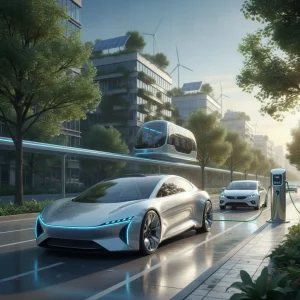
The Electric Vehicle Technology Innovation Landscape reflects a systemic shift in transportation engineering where propulsion, storage, software control, and energy ecosystems merge into a unified technological architecture replacing the mechanical dominance of combustion era mobility.
Battery Architecture Transformation
Energy storage sits at the center of electric mobility engineering. Lithium ion chemistry remains foundational, yet rapid diversification into solid state systems, lithium iron phosphate variants, and silicon enriched anodes is redefining durability, density, and safety parameters. Research from the Nature Energy battery science collection documents how electrolyte innovation directly influences charging speed and thermal stability.
Battery packs now function as structural elements rather than discrete components. Structural battery integration reduces vehicle mass while increasing rigidity, allowing manufacturers to eliminate redundant chassis elements. Technical analysis published by the United States Department of Energy Vehicle Technologies Office explains how pack level engineering determines overall efficiency more than motor output alone.
Manufacturing scalability depends on cell format optimization. Cylindrical, prismatic, and pouch designs each balance thermal management, packaging efficiency, and automation compatibility. Gigafactory production models prioritize repeatability and yield optimization, using inline diagnostics to detect microscopic defects during electrode coating and stacking.
Recycling infrastructure evolves simultaneously. Closed loop recovery processes reclaim lithium, nickel, and cobalt through hydrometallurgical methods described by the International Energy Agency global EV analysis, reducing dependence on primary extraction while stabilizing supply chains.
Electric Vehicle Technology Innovation Landscape
Power electronics convert stored chemical energy into controlled mechanical motion. Silicon carbide and gallium nitride semiconductors replace traditional silicon devices because they switch faster, dissipate less heat, and enable higher voltage architectures. These materials allow smaller inverters and lighter cooling systems, increasing overall drivetrain efficiency.
High voltage platforms exceeding conventional levels reduce current demand, minimizing resistive losses across cables and connectors. Engineering guidance from the SAE International technical standards library outlines how next generation electrical architectures support faster charging without excessive thermal stress.
Thermal management becomes a multidisciplinary challenge integrating fluid dynamics, software prediction, and materials engineering. Active cooling plates, phase change materials, and predictive temperature modeling ensure consistent battery performance across climates and duty cycles.
Electric propulsion systems simplify mechanical complexity yet demand extreme precision in electromagnetic design. Hairpin windings, axial flux motors, and advanced magnet geometries deliver higher torque density while reducing rare earth usage.
Charging Infrastructure and Energy Integration

Charging technology determines usability as much as vehicle capability. Ultra fast charging networks deploy high power direct current systems capable of replenishing range in minutes rather than hours. Grid integration research conducted by the National Renewable Energy Laboratory transportation program shows that coordinated charging prevents destabilization of electrical infrastructure.
Bidirectional charging introduces vehicle to grid interaction, allowing parked vehicles to supply energy back to utilities during demand peaks. This transforms electric fleets into distributed storage assets supporting renewable energy variability.
Wireless inductive charging eliminates physical connectors, embedding coils beneath road surfaces or parking areas. Pilot deployments studied by the World Economic Forum mobility platform demonstrate how dynamic charging could extend range without increasing battery size.
Smart charging algorithms schedule energy flow based on grid carbon intensity, cost signals, and user behavior patterns, integrating transportation into broader energy optimization strategies.
Software Defined Energy Management
Electric mobility relies on software orchestration as much as hardware capability. Battery management systems monitor voltage, current, and temperature at cell level resolution, using predictive analytics to maintain safety margins and extend lifespan.
Over the air updates continuously refine charging curves, thermal models, and efficiency algorithms. Documentation from the UNECE vehicle regulation framework highlights cybersecurity requirements ensuring software updates cannot compromise safety critical systems.
Artificial intelligence models forecast degradation patterns, allowing adaptive control strategies that preserve capacity over extended operational periods. Digital simulation environments replicate real world driving conditions to refine control software before deployment.
User interfaces integrate navigation with charging infrastructure databases, calculating optimal routes based on energy consumption, terrain, and charger availability.
Materials Science and Lightweight Electrification
Vehicle mass directly affects energy consumption, making lightweight engineering central to electrification success. Aluminum intensive structures, carbon fiber composites, and high strength steels reduce weight while maintaining crash safety.
Nanostructured materials improve electrode conductivity and mechanical resilience. Research published through the ScienceDirect electric vehicle materials archive explains how microstructural optimization increases cycle life and charge tolerance.
Thermal interface materials conduct heat away from battery cells while maintaining electrical insulation. These materials require precise formulation to balance conductivity, flexibility, and durability.
Magnet innovation reduces reliance on scarce rare earth elements by optimizing magnetic field geometry, supporting more sustainable motor production.
Manufacturing Ecosystems for Electrified Platforms
Electric vehicle production diverges sharply from combustion vehicle assembly. Absence of engine machining reduces some complexity, yet battery fabrication introduces cleanroom conditions, chemical handling, and high precision automation.
Cell production resembles semiconductor manufacturing in its sensitivity to contamination and process variance. Equipment alignment tolerances measured in microns determine final energy density and safety reliability.
Vehicle assembly integrates high voltage validation stages, electromagnetic compatibility testing, and software calibration processes absent in legacy manufacturing. Industrial strategies documented by the McKinsey electric mobility research show that production efficiency now depends on vertical integration between cell manufacturing and final assembly.
Localized battery production reduces transportation risk and aligns supply chains with regional demand clusters.
Lifecycle Sustainability and Circular Energy Systems

Electrification, driven by Electric Vehicle Technology, shifts environmental analysis away from tailpipe emissions toward full lifecycle accountability, requiring mining, processing, production, operation, and recycling to be assessed collectively to measure authentic sustainability impact.
Lifecycle assessment methodologies aligned with Electric Vehicle Technology, as described in the United Nations Environment Programme energy transition work, emphasize transparent accounting of embedded carbon within both materials and manufacturing systems.
Second life battery deployment within Electric Vehicle Technology repurposes retired vehicle packs into stationary storage that supports renewable energy installations, extending material usefulness prior to final recycling.
Circular design principles embedded in Electric Vehicle Technology ensure efficient disassembly, enabling material recovery without destructive processing methods.
Autonomous and Connected Integration With Electrification
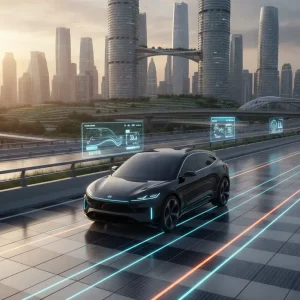
Electric platforms naturally align with autonomous technologies due to their electronic architecture and centralized computing systems. High voltage systems provide stable power for sensors, processors, and communication hardware.
Connected vehicle ecosystems share operational data to optimize routing, charging distribution, and traffic efficiency. Mobility analytics explored by the Boston Consulting Group mobility insights indicate that electrification and connectivity reinforce each other economically and technologically.
Autonomous fleet models prioritize electric drivetrains because predictable routes simplify charging logistics and maintenance planning.
Economic Restructuring of Transportation Value Chains
Electrification redistributes value creation away from mechanical complexity toward energy management, software capability, and materials engineering. Suppliers specializing in castings and fuel systems transition toward electronics, sensors, and battery components.
Capital expenditure shifts toward research laboratories, gigafactories, and digital infrastructure rather than engine plants. Workforce skill demand follows similar migration, emphasizing electrochemistry, software engineering, and power electronics design.
Energy providers, technology companies, and automotive manufacturers converge into shared ecosystems where transportation becomes an extension of the electrical grid.
Infrastructure Convergence and Urban Adaptation
Cities adapt planning frameworks to accommodate charging networks, distributed storage, and electrified public transit. Urban design increasingly incorporates mobility energy demand alongside traditional utilities.
Fleet electrification for buses, logistics vehicles, and municipal transport creates predictable charging hubs that anchor infrastructure deployment. Studies from the International Transport Forum illustrate how electrified fleets accelerate network utilization and cost recovery.
Integration with renewable generation ensures transportation electrification contributes to decarbonization rather than shifting emissions upstream.
Continuous Innovation Trajectory
Technological progress in electric mobility proceeds through cumulative optimization rather than singular breakthroughs. Battery chemistry, semiconductor materials, thermal systems, and software algorithms evolve concurrently, producing compounding efficiency gains.
Research institutions, industrial laboratories, and policy frameworks interact to accelerate adoption cycles. Standardization bodies coordinate safety, interoperability, and performance benchmarks to ensure scalability across global markets.
Electric mobility therefore represents an engineering convergence where energy science, digital systems, and advanced manufacturing coalesce into a persistent innovation ecosystem shaping the future structure of transportation.