Solid State Batteries Transform Electric Vehicles

Solid State Batteries Transform Electric Vehicles
Solid State Batteries Transform Electric Vehicles by replacing flammable liquid electrolytes with solid materials, enabling higher energy density, faster charging, longer lifespan, and structurally safer power systems that directly reshape performance limits, manufacturing strategies, and long-term cost curves across the automotive industry.
Why Solid State Batteries Are Replacing Lithium Ion Limits
Energy Density as the Core Breakthrough
Conventional lithium-ion batteries rely on liquid electrolytes that restrict voltage stability and thermal thresholds, capping how much energy can be stored per kilogram. Solid electrolytes eliminate those instability points, allowing manufacturers to stack higher-capacity electrodes without thermal runaway risks.
Research institutions such as MIT’s battery materials lab demonstrate solid electrolytes enabling lithium metal anodes, which theoretically double energy density compared to graphite-based designs used today.
Higher density directly translates to:
- Longer driving range without increasing vehicle weight
- Smaller battery packs for the same range
- Improved vehicle efficiency
An EV using solid state cells could travel 800 to 1000 kilometers on a single charge without expanding pack size.
Structural Safety Improvements
Liquid electrolytes are volatile. Puncture, overheating, or internal short circuits can trigger fires.
Solid materials:
- Do not leak
- Do not vaporize
- Do not ignite under standard failure conditions
Testing published by Toyota’s battery research division shows solid electrolyte cells resisting thermal runaway even under mechanical damage.
This removes the need for heavy fireproof casings, cooling systems, and safety buffers that inflate modern EV battery weight and cost.
Faster Charging Without Degradation
Ion Movement in Solid Media
Liquid electrolytes slow down under high current, creating heat and dendrite formation that damages cells.
Modern solid electrolytes such as sulfide and oxide ceramics allow:
- Faster lithium ion transport
- Reduced internal resistance
- Minimal dendrite growth
The US Department of Energy battery initiative reports solid state cells sustaining ultra-fast charging cycles without capacity loss.
Practical Charging Scenarios
Projected performance includes:
- 10 to 80 percent charge in under 15 minutes
- No accelerated degradation over thousands of cycles
- Stable performance in cold and hot climates
This erases one of EV adoption’s biggest friction points: long charging stops.
Solid State Batteries Transform Electric Vehicles Manufacturing
Simplified Pack Architecture
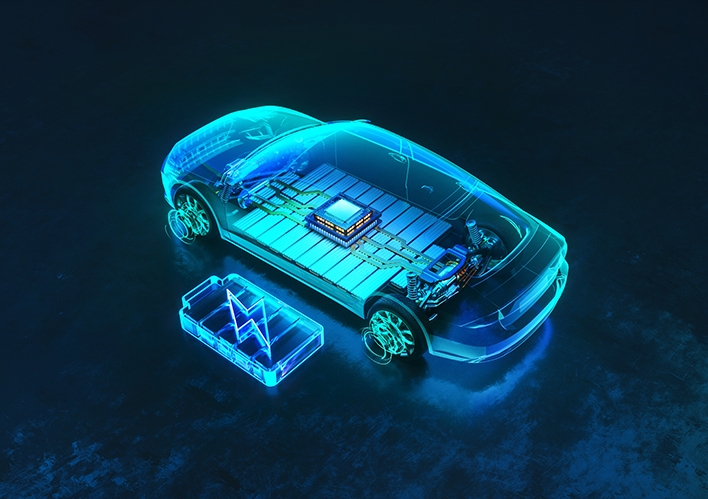
Without liquid containment, cooling fluid channels, and complex separators, battery packs can be:
- Thinner
- Modular
- Structurally integrated into vehicle frames
Tesla’s structural battery concept described in its Battery Day presentation becomes far more viable with solid cells acting as load-bearing components.
Cost Curve Compression
Early solid state batteries are expensive due to material purity and production scale.
However:
- Fewer safety systems reduce component count
- Higher energy density lowers raw material volume per kWh
- Longer lifespan reduces warranty reserves
According to analysis by BloombergNEF, solid state cost parity with lithium-ion could occur once gigafactory scale production stabilizes.
Once parity hits, cost declines accelerate faster than traditional battery chemistries.
Automaker Race Toward Commercialization
Toyota’s Production Timeline
Toyota has invested billions in solid electrolyte research and publicly demonstrated prototype vehicles using the technology.
Its development roadmap outlined in Toyota’s technology strategy report targets limited production models first, followed by mass-market rollout once manufacturing yield improves.
Volkswagen and QuantumScape
Volkswagen partnered with QuantumScape to develop lithium-metal solid state cells.
Independent testing confirmed:
- Over 800 fast-charge cycles with minimal degradation
- Energy density exceeding current lithium-ion cells
- Stable performance at automotive operating temperatures
Volkswagen plans to integrate these batteries into next-generation EV platforms once pilot production scales.
Hyundai and Samsung SDI
Korean manufacturers are investing heavily in sulfide-based solid electrolytes due to their high conductivity.
Samsung SDI’s roadmap published through its energy storage division focuses on commercialization within the decade.
Remaining Technical Barriers
Material Stability
Some solid electrolytes degrade when exposed to moisture or react with lithium metal anodes.
Engineers are solving this through:
- Protective interlayers
- Hybrid composite electrolytes
- Encapsulation techniques
Breakthroughs published in Nature Energy show multi-layer solid electrolyte systems maintaining stability over long cycles.
Manufacturing Yield
Solid ceramic layers must be produced at micron-level thickness without cracks.
Scaling this precision to gigafactory volumes remains the main bottleneck.
Automation improvements and roll-to-roll processing adapted from semiconductor manufacturing are gradually resolving this.
Impact on Vehicle Design and Performance
Range Expansion Without Weight Growth
Solid state energy density allows:
- Smaller packs delivering greater range
- More cabin space
- Lower curb weight
This improves acceleration, braking, handling, and tire longevity.
Extreme Climate Operation
Liquid electrolytes thicken in cold temperatures and overheat in hot climates.
Solid materials remain stable across broader thermal ranges, improving winter driving performance and eliminating heavy thermal management systems.
Environmental and Supply Chain Advantages
Reduced Critical Mineral Dependence
Higher energy density means:
- Less cobalt
- Less nickel
- Less lithium per vehicle
This reduces mining impact and geopolitical supply risk.
The International Energy Agency battery supply report highlights solid state technology as a key path toward mineral demand stabilization.
Longer Battery Lifespan
Solid state cells can exceed:
- 3000 charge cycles
- 15 to 20 years of vehicle use
This enables:
- Vehicle-to-grid energy storage
- Second-life stationary power systems
- Reduced battery waste
How Solid State Batteries Reshape the EV Market
Total Cost of Ownership Collapse
Longer lifespan plus faster charging plus higher range produces:
- Lower maintenance
- Higher resale value
- Fewer charging infrastructure demands
Fleet operators benefit most, accelerating commercial EV adoption.
Consumer Behavior Shift
When EVs:
- Charge as fast as refueling
- Drive farther than gasoline cars
- Last longer mechanically
Adoption barriers disappear.
Market conversion accelerates nonlinearly.
Timeline Toward Mass Adoption
Short Term
- Pilot production vehicles
- High-end performance models
- Limited fleet deployments
Medium Term
- Mass-market EV integration
- Cost parity with lithium-ion
- Infrastructure simplification
Long Term
- Dominant battery architecture
- Fossil fuel vehicle phase-out acceleration
- Energy storage convergence across transportation and grid systems
Strategic Consequences for Automakers
Manufacturers that master solid state production early gain:
- Cost leadership
- Range superiority
- Safety brand dominance
Late adopters face compressed margins and technological irrelevance.
Battery technology now defines automotive competitiveness more than engine design ever did.
The Structural Shift in Transportation
Solid state batteries are not incremental upgrades.
They represent:
- A new materials platform
- A manufacturing reset
- A performance ceiling expansion
Just as internal combustion replaced steam power, solid state systems replace liquid electrolyte limitations.
The transition reshapes:
- Vehicle architecture
- Energy infrastructure
- Global supply chains
Solid State Batteries Transform Electric Vehicles from constrained alternatives into dominant transportation systems capable of surpassing combustion performance on every metric that matters: range, safety, cost, durability, and convenience.