The Return of the Manual Transmission Enthusiast Car
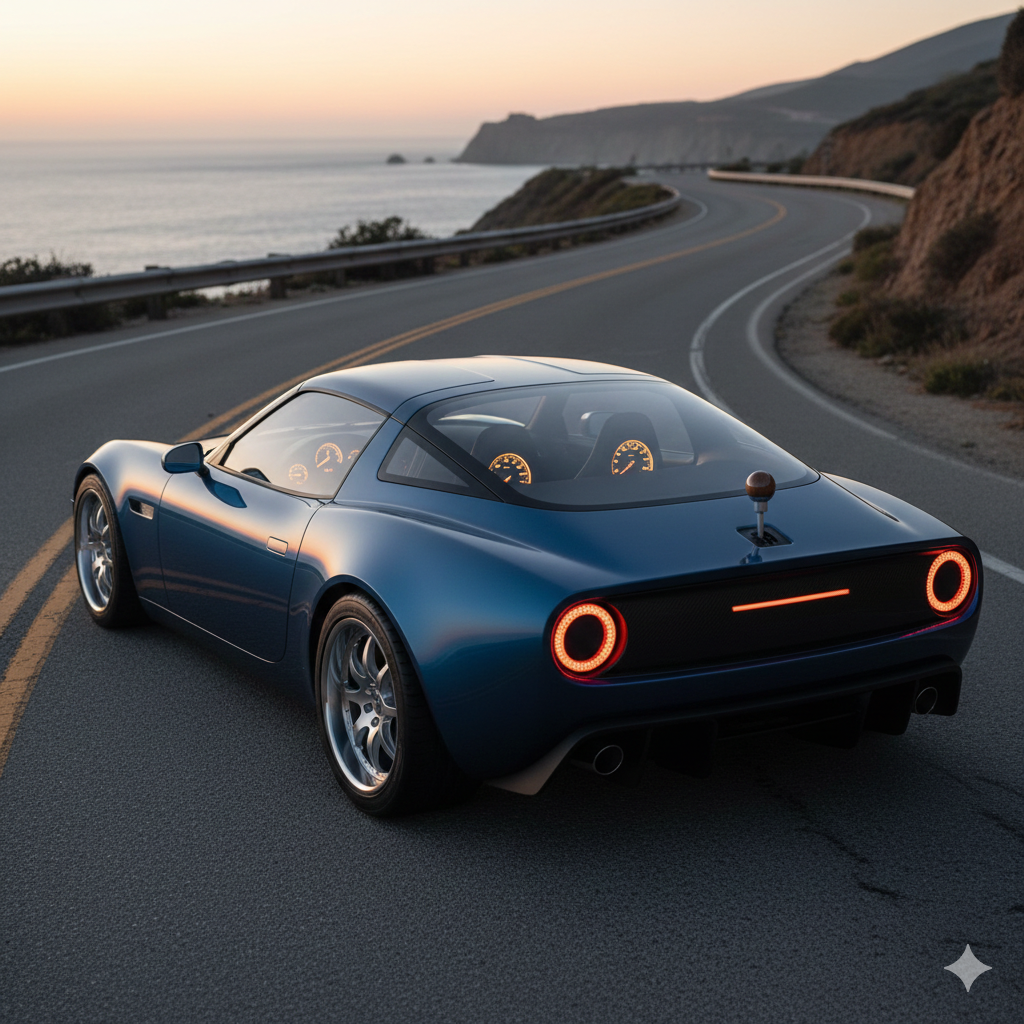
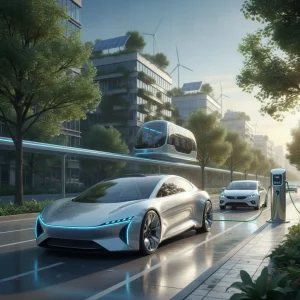
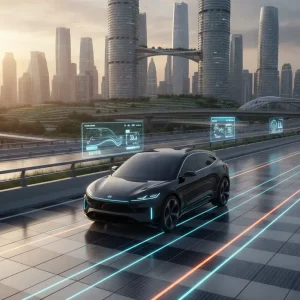
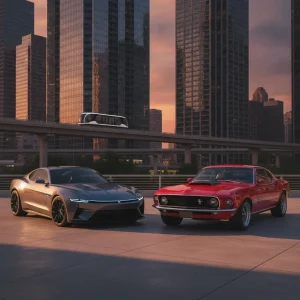
In the high-voltage landscape of 2026, where the hum of electric motors has become the standard soundtrack of the commute, a quiet yet fervent counter-revolution is taking place. While silicon-dense commuters and autonomous transit pods dominate the headlines with their promises of sterile efficiency, a distinct echelon of drivers is looking backward to move forward. This is the era of the Great Realignment—a period where the tactile, the mechanical, and the visceral have transitioned from obsolete to essential. We are witnessing the definitive return of the analog enthusiast car, a phenomenon where the machine is no longer just a tool, but a living partner in the act of driving.
The modern vehicle has become a rolling supercomputer, a “software-defined entity” that prioritizes connectivity over character. Yet, for a significant and vocal minority, the allure of a haptic interface—one made of gears, cables, and unassisted feedback—has never been stronger. This resurgence is fueled by a desire to reclaim the “kinetic intimacy” that has been sanded off by decades of digital progress. It is a rebellion against the “drive-by-wire” numbness that defines the contemporary fleet.
The Last Bastion of the Three-Pedal Sanctuary
To understand this movement, one must look at the survivors. In an industry obsessed with milliseconds and dual-clutch efficiency, the act of rowing one’s own gears has become a profound statement of intent. The Manual Transmission Cars 2026 List is shorter than it was a decade ago, but the quality of the remaining contenders is unparalleled. These are not remnants of a dying age; they are purpose-built monuments to the enthusiast.
Manufacturers like Toyota, BMW, and Honda have leaned into this niche, recognizing that while the mass market craves automation, the aficionado craves agency. The 2026 Toyota GR86 and its twin, the Subaru BRZ, remain the standard-bearers for accessible purity. With their naturally aspirated boxer engines and snick-snick gearboxes, they provide a masterclass in weight distribution and rotational inertia. Higher up the food chain, the BMW M2 and the Honda Civic Type R continue to prove that high-performance front-engine layouts are best served with a stick and a clutch. Even Porsche, the master of the lightning-fast PDK, still offers the 911 T for those who believe that a lap time is less important than a perfect rev-match on the entry to a hairpin.
This list of manual survivors represents a “curated resistance.” These cars are sought after not because they are faster—indeed, they are often slower than their automatic counterparts—but because they demand a higher level of “cognitive-motor synthesis.” To drive them well is to perform a complex, physical dance that requires the synchronicity of all four limbs. In 2026, this is the ultimate luxury: the luxury of being necessary to the process.
The Contemporary Artisans: Seeking Purity in the Showroom
For those looking for a new vehicle that captures the soul of the past without the maintenance anxieties of a vintage project, the search for Modern Analog Sports Cars for Sale has become a sophisticated pursuit. These vehicles are characterized by a “reductive philosophy.” They eschew massive infotainment screens and intrusive driver-assistance systems in favor of lightness, direct steering, and mechanical limited-slip differentials.
Consider the Lotus Emira, the final internal-combustion swan song from Hethel. It is a car that values mid-engine balance and hydraulic steering feel above all else. In a world of numb, electric-power-steering racks, the Emira communicates the texture of the asphalt with telepathic clarity. Similarly, the Mazda MX-5 Miata continues its decades-long reign as the quintessential “analog” experience. It remains a featherweight in a heavyweight world, proving that you don’t need 600 horsepower to have a transformative experience on a canyon road; you just need a low polar moment of inertia and the wind in your hair.
These modern analogs are the “slow-food movement” of the automotive world. They encourage a more deliberate, thoughtful engagement with the environment. They are the antithesis of the “passive passenger” experience that modern luxury brands are pushing. When you find these Modern Analog Sports Cars for Sale, you aren’t just buying a vehicle; you are acquiring a sensory instrument designed to amplify the signal of the road and dampen the noise of the digital world.
The Investment Grade: Scouting the Bull Market
The passion for analog experiences has also ignited a frenzy in the collector market. As the new car market becomes increasingly electrified, the finite supply of great mechanical cars from the late 90s and early 2000s has seen a meteoric rise in valuation. The Hagerty 2026 Bull Market Car List serves as the definitive guide for this fiscal and emotional investment.
This year, the list is dominated by cars that represent the “Sweet Spot” of automotive history—the era when computer-aided design could optimize a chassis, but before electronic nannies took over the driving experience. The C6-generation Chevrolet Corvette Z06, with its monstrous 7.0-liter LS7 engine, is a prime example. It is a car that requires respect and skill, rewarding the brave with a raw, unadulterated American power delivery that is becoming extinct.
The Hagerty 2026 Bull Market Car List also highlights the E60 BMW M5, a sedan that houses a bespoke, high-revving V10 inspired by Formula 1. It is a temperamental masterpiece, a car that embodies the “hubris of engineering” in the best possible way. Collectors are recognizing that we will never see these types of uncompromising, combustion-heavy projects again. These vehicles are not just “used cars”; they are historical artifacts of a peak-petrol civilization.
The Symphony of Displacement: The Great V8 Holdouts
There is a specific, primal frequency that speaks to the automotive soul: the roar of a large-displacement, un-boosted engine. While turbocharging has become the industry standard for meeting emissions targets, it often comes at the cost of throttle response and acoustic character. This is why Naturally Aspirated V8 Enthusiast Cars 2026 have reached a near-mythic status.
The 2026 Ford Mustang GT, powered by the latest iteration of the Coyote V8, stands as a defiant sentinel in the American market. It offers a linear power curve and a crescendoing exhaust note that a turbocharged four-cylinder simply cannot replicate. Across the pond, the Lexus LC 500 continues to be the thinking person’s grand tourer. Its 5.0-liter V8 is a masterpiece of refined aggression, providing a “sonorous baritone” that makes every tunnel an opportunity for a private concert.
The appeal of Naturally Aspirated V8 Enthusiast Cars 2026 lies in their “instantaneous torque delivery.” There is no “lag,” no waiting for a turbine to spool. The connection between the accelerator pedal and the combustion chamber feels direct and unfiltered. In an age of artificiality, the honesty of a naturally aspirated engine is a rare and precious commodity. It is the difference between listening to a live orchestra and a high-bitrate recording.
The Import Horizon: The Class of 2001 Arrives
Finally, for the true “analog” devotee, 2026 marks a significant milestone in the legal landscape of the United States. The “25-year rule” is a piece of federal legislation that allows for the legal importation of vehicles not originally sold in the U.S. market once they reach their 25th birthday. The 25-Year Import Rule Cars 2026 list is particularly exciting because it unlocks a host of “Golden Era” JDM and European legends from the year 2001.
Enthusiasts are already preparing to welcome the first of the R34 Nissan Skyline GT-R M-Spec models—the more refined, “adult” version of the legendary Godzilla. Also becoming eligible is the Mitsubishi Lancer Evolution VII, the car that truly digitized the rally-bred experience while maintaining its mechanical core. From Europe, the Renault Clio V6 Phase 1—a mid-engine, rear-wheel-drive hatchback that is as absurd as it is brilliant—becomes a legal reality for American collectors.
The 25-Year Import Rule Cars 2026 represent the “forbidden fruit” that a whole generation of enthusiasts grew up driving in video games like Gran Turismo. Now, these cars can be touched, smelled, and driven on American soil. They offer a unique “cultural-mechanical crossover,” allowing a new generation to experience the specific engineering philosophies of Japan and Europe from a time when the world felt a little bit more diverse and less homogenized.
The Convergence of Craft and Character
As we navigate the mid-2020s, the “Return of the Analog” is not a sign of technological regression, but a sign of maturity in our relationship with the machine. We have realized that while automation is excellent for transportation, it is often detrimental to driving. The resurgence of Manual Transmission Cars 2026 List entries, the hunt for Modern Analog Sports Cars for Sale, and the reverence for Naturally Aspirated V8 Enthusiast Cars 2026 all point to a singular truth: the human spirit craves engagement.
Whether it is a young enthusiast importing their first JDM icon from the 25-Year Import Rule Cars 2026 list or a seasoned collector tracking the Hagerty 2026 Bull Market Car List, the motivation is the same. It is about the “unmediated experience.” It is about the smell of hot oil, the weight of the steering wheel at triple-digit speeds, and the satisfying “clack” of a gear lever finding its home.
The analog car is the ultimate luxury because it asks something of us. It requires our attention, our skill, and our presence. In an age of infinite distractions and digital ghosts, the analog enthusiast car offers the one thing we need most: a reason to be truly, viscerally alive in the moment. The road is calling, and for the first time in years, the answer is mechanical.