The Future of Automotive Innovation: Driving Towards Tomorrow
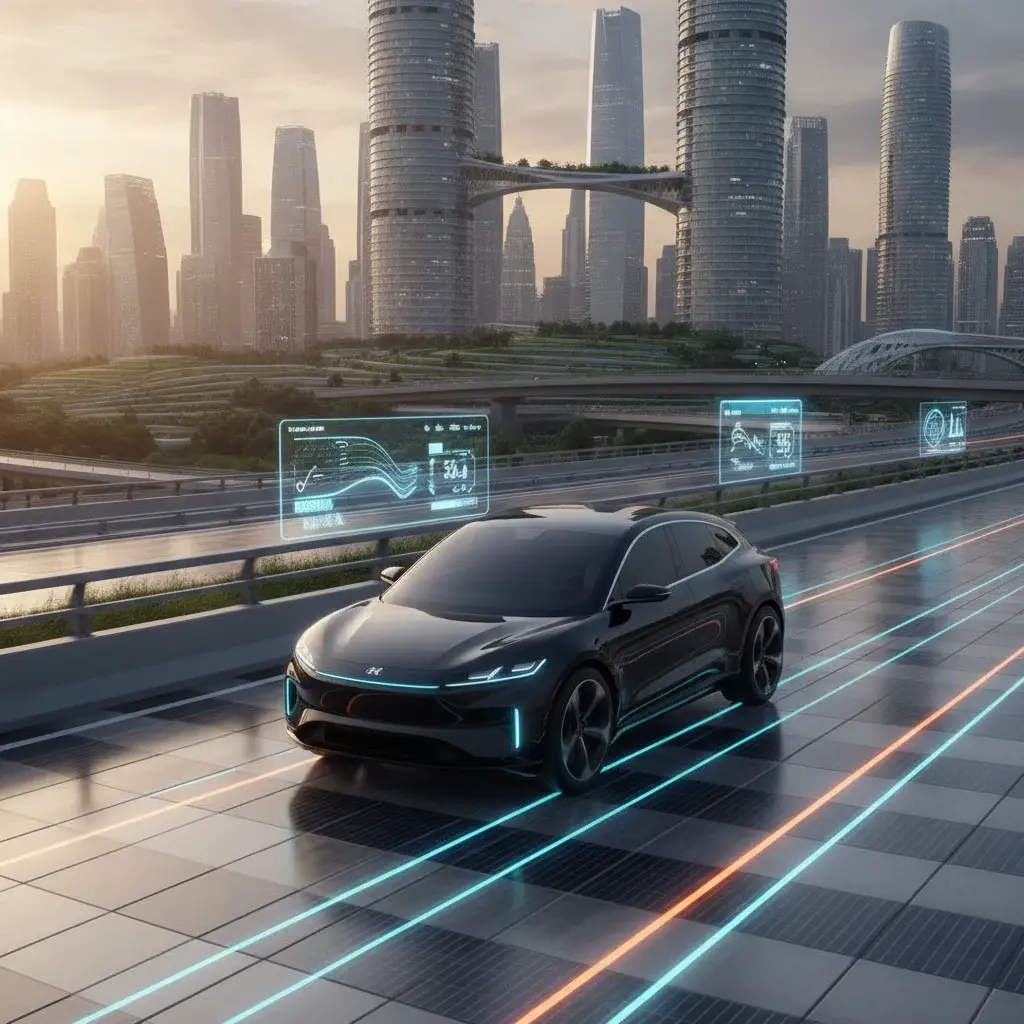
Imagine a world where your daily commute isn’t just a journey, but an intelligent, seamless experience. The roar of a combustion engine is giving way to the silent hum of electric power, and the driver’s seat is transforming into a command center brimming with artificial intelligence. We are standing on the precipice of an unprecedented transformation, witnessing the future of automotive innovation unfold before our very eyes. This isn’t science fiction; it’s the tangible reality emerging from research labs and production lines worldwide, promising to redefine not just how we travel, but how we interact with our environment. Join us as we explore the groundbreaking technologies and visionary concepts shaping the next era of personal mobility, where every drive is smarter, safer, and more sustainable.
The Electric Revolution: Powering a Cleaner Tomorrow
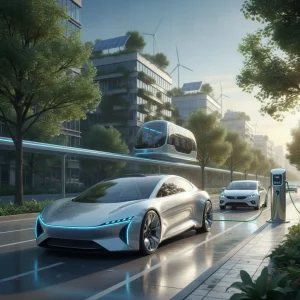
The transition to electric vehicles (EVs) is far more than a trend; it’s a fundamental shift powering a cleaner, more sustainable tomorrow. Global EV sales surged by an astonishing 35% in 2023, reaching over 14 million units, according to the International Energy Agency Global EV Outlook 2024. This rapid adoption is driven by advancements in battery technology, offering longer ranges and faster charging times, making range anxiety a relic of the past for many.
Beyond the impressive sales figures, the true marvel lies in the relentless innovation in battery chemistry and charging infrastructure. Solid-state batteries, for instance, promise higher energy density and faster charging speeds, potentially allowing for a 10-80% charge in under 15 minutes. This technological leap is making EVs increasingly practical and appealing for a broader demographic, accelerating our journey towards a zero-emission future.
Furthermore, the development of smart charging networks and bidirectional charging capabilities is transforming EVs into mobile power banks. Imagine your car not just consuming energy, but also feeding surplus electricity back into your home or the grid during peak hours. This integration of vehicles into the broader energy ecosystem is a game-changer for grid stability and energy independence, truly showcasing the power of electrified mobility.
Autonomous Vehicles: Redefining the Driver’s Seat
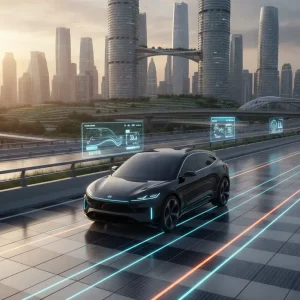
Perhaps no aspect of automotive innovation sparks more debate and excitement than autonomous vehicles. The dream of self-driving cars, once confined to futuristic movies, is now a tangible reality, with numerous companies testing and deploying various levels of autonomy. These systems, ranging from Level 2 advanced driver-assistance systems (ADAS) to emerging Level 4 and 5 full self-driving capabilities, promise to revolutionize safety and efficiency on our roads.
The SAE International J3016 standard defines six levels of driving automation, from no automation (Level 0) to full automation (Level 5). As we move towards higher levels, vehicles take on more responsibility, reducing human error which accounts for over 90% of all road accidents. Imagine a world with significantly fewer collisions, where traffic flows more smoothly and commutes become opportunities for relaxation or productivity.
The implications extend beyond safety. Autonomous vehicles could unlock new mobility options for the elderly and disabled, reduce parking congestion in urban centers, and even transform urban planning. While challenges remain in regulatory frameworks and public acceptance, the relentless pursuit of this technology signals a profound shift in how we perceive and utilize personal transportation, turning every journey into a potential leisure or work opportunity.
Connected Cars: A Symphony of Information
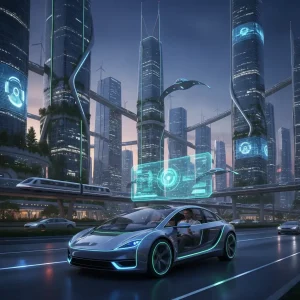
In parallel with electrification and autonomy, the rise of connected cars is weaving a dense, intelligent network across our roadways. These vehicles are no longer isolated machines; they are sophisticated nodes in a vast digital ecosystem, communicating with each other (V2V), with infrastructure (V2I), and with the cloud (V2C). This Vehicle-to-Everything (V2X) communication is the backbone of truly smart mobility.
Real-time data exchange allows cars to anticipate traffic jams, warn drivers of hazards around blind corners, and even coordinate with traffic lights to optimize flow. Companies like Qualcomm are at the forefront, developing chipsets that enable lightning-fast, reliable connectivity essential for these advanced features. This constant flow of information creates a safer, more efficient, and far more enjoyable driving experience.
Moreover, connected cars bring unparalleled convenience and personalization to the cabin. Over-the-air (OTA) updates can instantly improve performance, add new features, or patch security vulnerabilities, much like a smartphone. Integrated infotainment systems offer seamless access to navigation, entertainment, and communication, all tailored to individual preferences. The car is transforming into a personalized digital hub, making every journey productive and entertaining.
AI and Personalization: Tailoring the Drive
Artificial intelligence is the invisible conductor orchestrating many of these automotive innovations, driving personalization to unprecedented levels. AI algorithms analyze driving patterns, preferences, and even biometric data to create a truly bespoke experience. From predictive maintenance that alerts you to potential issues before they become problems to adaptive suspension that adjusts to road conditions, AI makes your car an intuitive partner.
Leading tech companies, such as NVIDIA, are developing powerful AI platforms that enable vehicles to understand complex environments, process vast amounts of sensor data, and even learn from human drivers. This cognitive ability allows for features like advanced voice assistants that understand natural language, intelligent climate control that anticipates your comfort needs, and personalized media recommendations.
The future car won’t just take you from point A to point B; it will learn your habits, anticipate your needs, and proactively enhance your journey. Imagine a car that suggests the optimal route based on your calendar appointments, pre-cools the cabin on a hot day before you even step inside, or even adjusts the seat and mirror settings automatically for different drivers. This level of intelligent personalization transforms driving from a chore into a truly integrated and delightful part of daily life.
Sustainable Materials and Manufacturing: Beyond the Tailpipe
While the focus often lies on powertrain and digital technologies, the future of automotive innovation also encompasses a profound commitment to sustainability throughout the vehicle’s lifecycle. Manufacturers are increasingly adopting circular economy principles, utilizing recycled and renewable materials, and optimizing production processes to minimize environmental impact. This holistic approach ensures that cars are not only clean to drive but also clean to produce and eventually recycle.
Innovations in lightweight materials, such as advanced composites and high-strength steels, reduce vehicle weight, thereby improving efficiency for both EVs and internal combustion engine vehicles. Furthermore, the use of bio-based plastics, recycled aluminum, and even sustainable textiles is becoming commonplace. Organizations like PlasticsEurope are actively promoting the circularity of materials within the automotive sector, aiming to reduce waste and conserve resources.
The manufacturing plants themselves are evolving, powered by renewable energy, employing advanced robotics for precision, and implementing water recycling systems. This commitment to sustainable manufacturing is not just about compliance; it’s about building a responsible future where mobility coexists harmoniously with our planet. Every component, from the chassis to the dashboard, is being re-evaluated through a lens of environmental stewardship.
The Human Element: Driving Passion in a Digital Age
Amidst all this technological advancement, one might wonder: what about the sheer joy of driving? Will the passion for cars diminish in an age of autonomy and digital interfaces? Absolutely not. The human element remains crucial, and innovation is also enhancing the driving experience for enthusiasts.
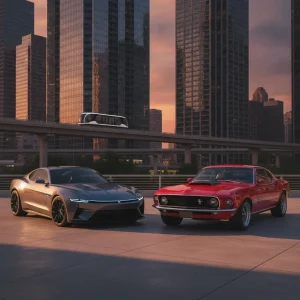
Performance EVs, for instance, are delivering instant torque and breathtaking acceleration that rivals, and often surpasses, traditional sports cars. The tactile feedback, the precision engineering, and the thrill of control will always be cherished. Furthermore, advanced customization options, both digital and physical, allow owners to imbue their vehicles with unique personality, fostering an even deeper connection.
Even in autonomous vehicles, the option for manual control will likely persist, allowing drivers to take the wheel when they desire. The future of automotive innovation isn’t about eradicating the joy of driving, but about offering choice, enhancing safety, and elevating every aspect of the mobility experience. It’s about creating vehicles that are not just modes of transport, but extensions of our lives, passions, and aspirations.
Embracing the Road Ahead
The journey into the future of automotive innovation is exhilarating, filled with groundbreaking technologies that promise to reshape our world. From the silent power of electric powertrains and the intelligent guidance of autonomous systems to the seamless connectivity and personalized experiences driven by AI, the cars of tomorrow will be smarter, safer, and more sustainable than ever before. We are entering an era where mobility is not just a means to an end, but an integral, intelligent, and inspiring part of our daily existence.
As these technologies mature and integrate, they will offer unparalleled freedom, efficiency, and environmental responsibility. The road ahead is paved with ingenuity, and the automotive landscape is transforming into a vibrant tapestry of technological marvels. Prepare to be amazed, because the future of driving is not just arriving; it’s already here, accelerating rapidly towards an extraordinary tomorrow.