Igniting the Future: Exploring Tomorrow’s Automotive Innovations
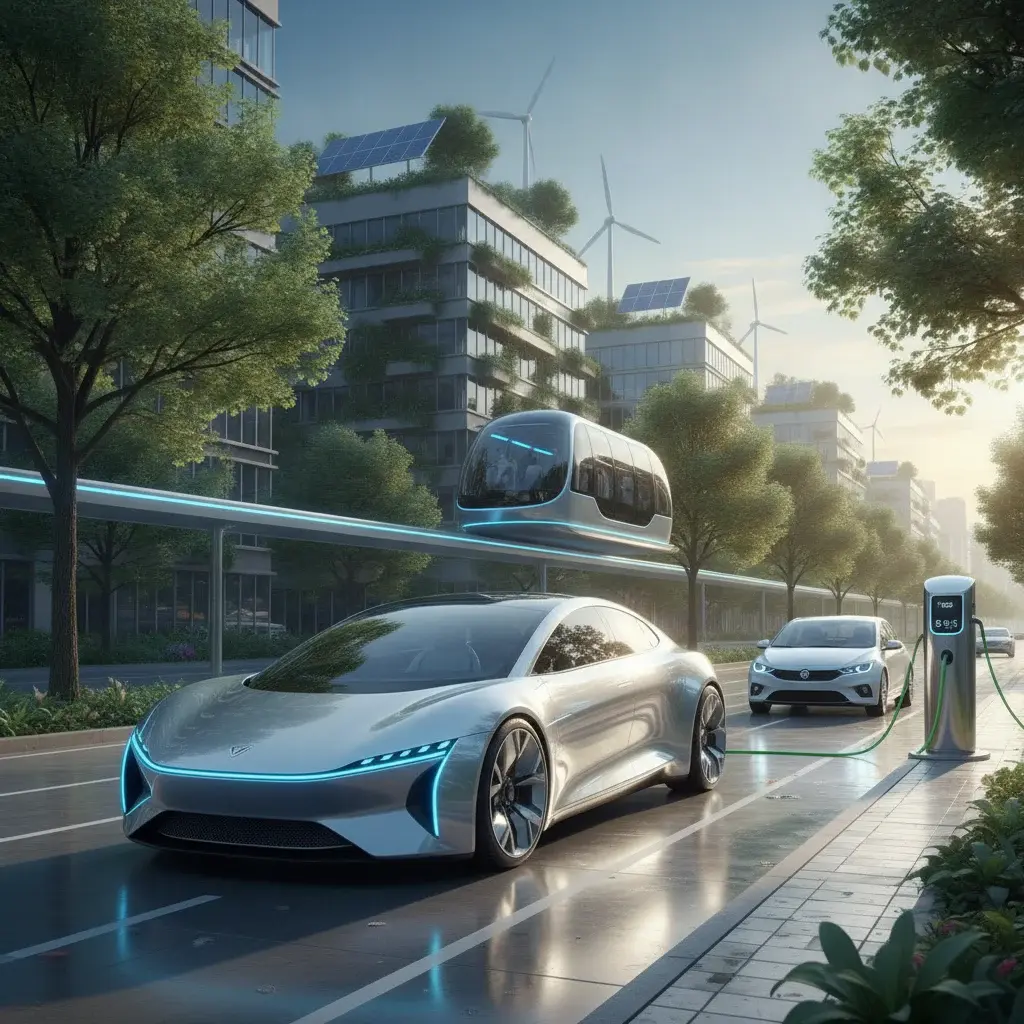
The roar of an engine, the sleek lines of a new model, the thrill of the open road – these are the timeless passions that define our love for cars. Yet, the automotive landscape is undergoing a transformation unlike any we’ve witnessed before. We stand on the precipice of an exhilarating era, where innovation isn’t just about speed or luxury, but about sustainability, intelligence, and seamless connectivity. This dynamic shift is redefining what a vehicle can be, propelling us into a future of automotive innovation that promises not only to change how we drive but how we live.
From the hum of electric powertrains to the silent promise of autonomous navigation, the industry is buzzing with groundbreaking advancements. This article delves into the most compelling trends shaping tomorrow’s vehicles, exploring the technologies, philosophies, and experiences that will soon become commonplace. Prepare to be inspired by the ingenious minds and audacious visions charting a course for the next generation of mobility.
The Electric Revolution: Charging Ahead with Sustainable Power
The electrification of vehicles is more than just a trend; it’s a monumental shift towards a cleaner, more efficient future. Electric Vehicles (EVs) are rapidly moving from niche status to mainstream adoption, driven by technological breakthroughs and a global imperative for environmental stewardship. In 2023, global EV sales topped an impressive 14 million units, and the International Energy Agency (IEA) projects this number to soar to 17 million in 2024, representing a significant portion of the total car market.
This surge isn’t just about reducing emissions; it’s about reimagining performance. Modern EVs offer instant torque, silent acceleration, and a driving experience that is both exhilarating and serene. Battery technology continues to evolve at a breathtaking pace, promising longer ranges, faster charging times, and greater affordability, making EVs an increasingly viable option for every driver.
Beyond the Battery: Performance and Design Prowess
The allure of electric vehicles extends far beyond their environmental benefits. Engineers and designers are leveraging the unique architecture of EVs – particularly the flat battery packs and compact motors – to create vehicles with revolutionary interior space, optimized weight distribution, and stunning aerodynamic profiles. This freedom in design is birthing a new aesthetic, blending futuristic elegance with unparalleled practicality.
Moreover, the performance capabilities are astounding. High-performance EVs are setting new benchmarks for acceleration, often outperforming traditional sports cars. The precision control offered by electric motors also enables advanced traction and stability systems, enhancing safety and handling in diverse driving conditions. It’s a testament to how electrification is not just about alternative power but superior engineering.
The Infrastructure Imperative: Powering Our Progress
As EV adoption accelerates, the development of robust charging infrastructure becomes paramount. Governments and private companies worldwide are investing heavily in expanding public charging networks, including ultra-fast DC chargers capable of replenishing a significant portion of a battery in minutes. Home charging solutions are also becoming more sophisticated, integrating with smart home systems for optimal energy management.
Furthermore, innovative solutions like inductive charging, battery swapping stations, and vehicle-to-grid (V2G) technology are on the horizon. These advancements promise to make owning and operating an EV as convenient, if not more so, than a gasoline-powered car, addressing range anxiety and ensuring seamless integration into our daily lives. The future of energy and mobility is intrinsically linked.
Autonomous Driving: The Road to Self-Reliance
Imagine a commute where your car handles the traffic, allowing you to catch up on work, enjoy a movie, or simply relax. This vision of autonomous driving is rapidly becoming a reality. Self-driving technology promises to revolutionize safety, efficiency, and accessibility in transportation, offering a profound shift in how we interact with our vehicles and our environment.
While fully autonomous vehicles (Level 5) are still some years away from widespread deployment, advanced driver-assistance systems (ADAS) are already commonplace. Features like adaptive cruise control, lane-keeping assist, and automatic emergency braking are paving the way, demonstrating the capabilities and safety benefits of these intelligent systems. The journey towards full autonomy is a gradual but relentless progression.
Levels of Autonomy Explained: From Assistance to Full Automation
Understanding autonomous driving requires familiarity with the SAE International J3016 standard, which defines six levels of driving automation. These range from Level 0 (no automation) to Level 5 (full automation where the vehicle handles all driving tasks under all conditions). Most vehicles today feature Level 1 or Level 2 systems, offering driver assistance but requiring constant human supervision.
Level 3 systems, such as Honda’s Traffic Jam Pilot, allow for conditional automation, where the driver can disengage in specific environments but must be ready to take over. Level 4 and Level 5 represent truly self-driving capabilities, promising a future where the steering wheel might even become optional. Each step forward brings us closer to a world where cars can truly drive themselves, enhancing safety and convenience for all.
Safety and Public Acceptance: Building Trust on the Road
The paramount concern for autonomous vehicles is safety. Rigorous testing, advanced sensor fusion, and sophisticated AI algorithms are crucial for ensuring these systems perform reliably in complex real-world scenarios. Companies are investing billions in simulations and real-world road tests to validate the safety of their autonomous platforms, striving to exceed human driving safety records.
Public acceptance is also vital. Educating consumers about the capabilities and limitations of autonomous systems, alongside transparent reporting of incidents and continuous improvement, will be key to building trust. As the technology matures and its safety benefits become undeniable, we can expect a gradual but significant embrace of self-driving cars, transforming urban mobility and long-distance travel.
AI and Connectivity: The Smart Car Ecosystem
Today’s vehicles are no longer just modes of transport; they are sophisticated, connected computers on wheels. Artificial Intelligence (AI) and advanced connectivity are at the heart of this transformation, creating smart car ecosystems that enhance safety, convenience, and the overall driving experience. From intuitive infotainment systems to predictive maintenance, AI is making cars smarter and more responsive.
Vehicle-to-Everything (V2X) communication, for example, allows cars to communicate with each other (V2V), with infrastructure (V2I), and even with pedestrians (V2P). This network of communication promises to dramatically reduce accidents, optimize traffic flow, and provide real-time information to drivers, creating a seamless and safer transportation network.
Personalized Driving Experiences: Your Car, Your Way
AI is enabling a new level of personalization within vehicles. Infotainment systems powered by AI can learn driver preferences, from climate control settings and seat positions to preferred music genres and navigation routes. Voice assistants are becoming more natural and capable, allowing drivers to control various functions without taking their hands off the wheel or eyes off the road.
Future iterations will likely see AI anticipate needs, proactively suggest routes based on real-time conditions, and even monitor driver alertness to prevent fatigue-related accidents. This hyper-personalization transforms the car from a generic machine into a truly bespoke companion, adapting to individual preferences and making every journey more enjoyable and efficient.
Predictive Maintenance and Diagnostics: Staying Ahead of Trouble
One of the most practical applications of AI in automotive is predictive maintenance. Sensors throughout the vehicle constantly monitor the performance of critical components, feeding data to AI algorithms that can detect subtle anomalies indicative of impending failure. This allows for proactive servicing, preventing costly breakdowns and extending the lifespan of the vehicle.
Imagine your car notifying you that a specific part needs attention before it fails, allowing you to schedule a service at your convenience. This not only saves money and hassle but also significantly enhances safety. According to Deloitte’s Global Automotive Consumer Study, a significant percentage of consumers are interested in services that enhance vehicle reliability, underscoring the value of such AI-driven solutions.
Sustainable Mobility: Greener Wheels for a Brighter Tomorrow
Beyond electrification, the automotive industry is embracing a holistic approach to sustainability, focusing on the entire lifecycle of a vehicle. This includes the use of eco-friendly materials, sustainable manufacturing processes, and the adoption of circular economy principles. The goal is to minimize environmental impact from conception to end-of-life, creating truly green mobility solutions.
Manufacturers are actively exploring alternatives to traditional materials, experimenting with recycled plastics, bio-based composites, and even materials derived from waste products. This commitment to sustainability is not just about compliance; it’s about a fundamental reimagining of how cars are made and consumed, driven by consumer demand and corporate responsibility.
Eco-Conscious Manufacturing: Building Better, Greener Cars
Modern automotive factories are becoming increasingly energy-efficient, utilizing renewable energy sources and advanced manufacturing techniques to reduce waste and emissions. Innovations in paint shops, for instance, are leading to significant reductions in volatile organic compounds (VOCs). Water recycling and waste heat recovery are also becoming standard practices, minimizing the environmental footprint of production.
Companies like the BMW Group are setting ambitious targets, aiming for carbon-neutral production and designing vehicles like the BMW i Vision Circular with 100% recyclable materials in mind. This dedication to green manufacturing ensures that the positive impact of sustainable vehicles starts long before they ever hit the road, creating a truly circular approach to automotive production.
The Circular Economy in Automotive: A New Paradigm
The concept of a circular economy – where products are designed for durability, reuse, and recycling – is gaining significant traction in the automotive sector. This involves designing components that can be easily disassembled and recycled, maximizing the value of materials at the end of a vehicle’s life. It’s a move away from the traditional ‘take-make-dispose’ model towards one of continuous resource optimization.
Battery recycling, for example, is a critical area of focus, with technologies emerging to recover valuable materials like lithium, cobalt, and nickel from spent EV batteries. This not only reduces the need for new raw materials but also mitigates the environmental impact of battery disposal, closing the loop on a sustainable energy future. The industry is committed to ensuring that every part of a car has a second life.
The Human Element: Reshaping the Driver Experience
As technology advances, the relationship between humans and their vehicles is also evolving. The future of automotive isn’t just about what cars can do, but how they integrate into our lifestyles. New ownership models, shared mobility services, and a focus on the in-car experience are redefining what it means to be a driver or passenger in the 21st century. Flexibility and access are becoming as important as ownership.
This shift is particularly evident in urban areas, where shared mobility services and subscription models offer alternatives to traditional car ownership. The emphasis is moving from owning a depreciating asset to accessing mobility when and where it’s needed, aligning with a broader trend towards service-based consumption.
Subscription Services and Flexible Ownership: Mobility on Demand
Car subscription services are emerging as an attractive alternative to buying or leasing, offering the flexibility to swap vehicles, manage all costs in one monthly payment, and avoid long-term commitments. This model caters to a generation that values access over ownership, allowing consumers to experience different vehicle types without the financial burden of purchase.
Companies like Care by Volvo and Porsche Drive are leading the charge, providing premium subscription options that include insurance, maintenance, and roadside assistance. This trend reflects a broader societal move towards on-demand services, where convenience and adaptability are paramount, offering a seamless and worry-free way to enjoy diverse driving experiences.
The Evolving Dealership Experience: More Than Just Sales
Automotive dealerships are also transforming, moving beyond mere sales points to become mobility hubs and experience centers. The focus is shifting towards providing immersive brand experiences, educating customers about new technologies, and offering a range of services, including charging, maintenance, and even autonomous vehicle demonstrations. The traditional sales model is adapting to a more service-oriented approach.
Digitalization plays a crucial role, with online configurators, virtual test drives, and seamless digital purchasing processes complementing the physical dealership experience. This integration of online and offline channels creates a more convenient, transparent, and engaging journey for the modern car buyer, reflecting the evolving expectations of today’s tech-savvy consumers.
The Road Ahead: A Future Full of Promise
The automotive industry is at a pivotal moment, accelerating towards a future that is electric, intelligent, sustainable, and deeply integrated into our lives. From the quiet efficiency of EVs to the profound implications of autonomous driving, the innovations unfolding before us are nothing short of revolutionary. This isn’t just about new models; it’s about a complete paradigm shift in how we conceive of personal mobility.
As these exciting trends converge, we anticipate a future where vehicles are not only safer and more environmentally friendly but also more personalized, convenient, and connected than ever before. The passion for the open road remains, but the journey itself is being redefined, promising an exhilarating ride into a future full of boundless possibilities and breathtaking advancements. The next chapter of automotive history is being written right now, and it promises to be an extraordinary one.