Autonomous Driving Systems Redefine Transportation
Autonomous Driving Systems Redefine Transportation
Autonomous Driving Systems Redefine Transportation by replacing human reaction limits with sensor fusion, machine perception, predictive control, and real-time decision networks that continuously optimize safety, efficiency, traffic flow, and urban mobility economics.
The Core Technologies Powering Self Driving Vehicles
Sensor Fusion as Machine Perception
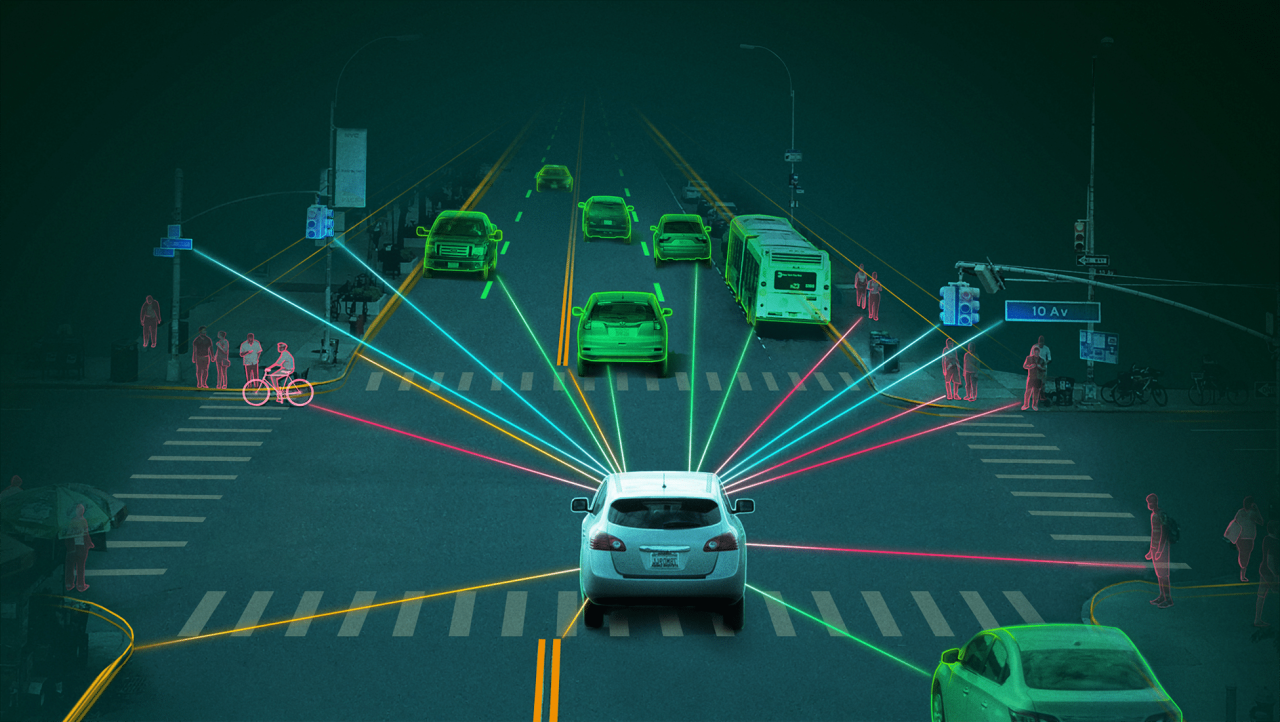
Autonomous vehicles rely on layered perception systems combining cameras, radar, ultrasonic sensors, and LiDAR to construct real-time three-dimensional environmental models called Autonomous Driving System.
Modern LiDAR mapping used by companies like Waymo’s autonomous platform generates centimeter-level spatial awareness even in low light and poor weather.
Radar systems penetrate fog and rain while cameras provide semantic recognition of road signs, pedestrians, cyclists, and lane markings.
The fusion of these data streams eliminates single-sensor failure risk and enables continuous situational certainty.
High Performance Onboard Computing
Real-time decision making requires extreme processing throughput.
Autonomous vehicles now integrate AI accelerators capable of trillions of operations per second.
NVIDIA’s automotive AI architecture described at NVIDIA DRIVE enables object detection, path planning, and collision prediction simultaneously.
Latency below milliseconds is essential to maintain human-level reaction advantages.
Machine Learning for Predictive Behavior
Self driving systems no longer react only to current inputs.
They predict:
- Pedestrian movement trajectories
- Vehicle merging intent
- Traffic signal timing
- Obstacle probability distributions
Research from Stanford’s autonomous systems lab demonstrates predictive modeling reducing collision risk far beyond rule-based driving algorithms.
Autonomous Driving Systems Redefine Transportation Infrastructure
Smart Roads and Vehicle Communication
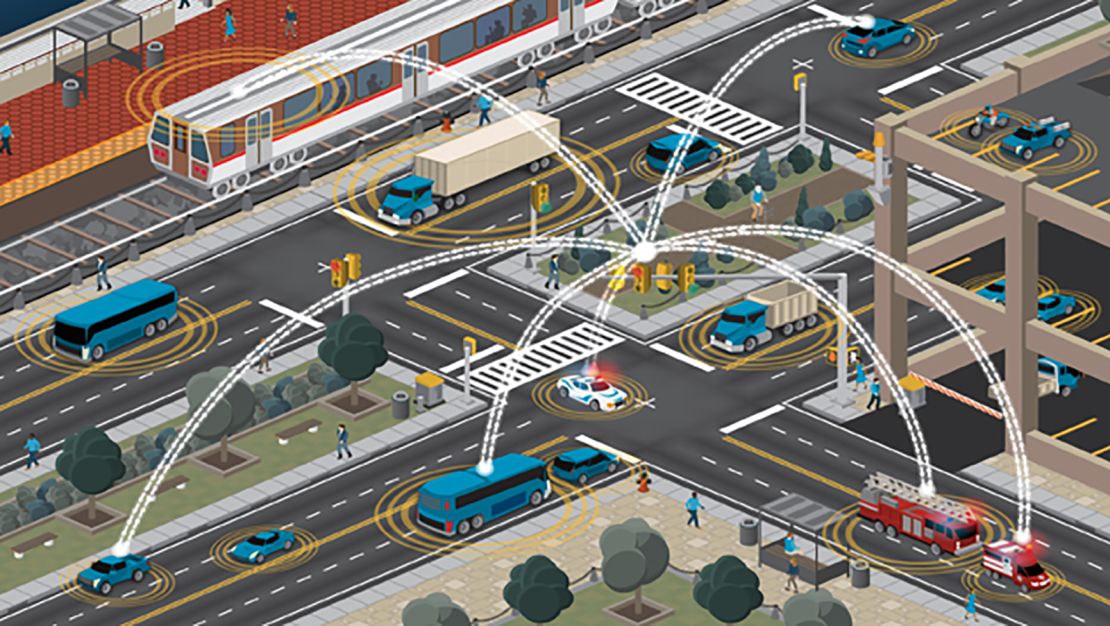
Autonomous vehicles increasingly interact with connected infrastructure.
Vehicle-to-infrastructure systems allow cars to receive:
- Traffic light phase data
- Road hazard alerts
- Congestion patterns
- Emergency vehicle approach warnings
The US Department of Transportation explains connected mobility frameworks through ITS intelligent transportation systems.
This coordination smooths traffic flow, reducing braking cycles and energy waste.
Urban Design Transformation
Parking demand collapses when vehicles self-deploy.
Autonomous fleets can circulate or reposition rather than remain idle.
Urban land currently consumed by parking structures becomes available for:
- Housing
- Commercial use
- Green spaces
- Transit corridors
City planning models published by McKinsey mobility research show dense cities reclaiming up to 30 percent of street space.
Safety Gains Through Algorithmic Precision
Eliminating Human Error
Over 90 percent of road accidents result from human behavior including distraction, fatigue, intoxication, and misjudgment.
The National Highway Traffic Safety Administration documents human error as the dominant crash cause.
Autonomous systems never:
- Lose focus
- Exceed reaction thresholds
- Misinterpret visibility
- Drive impaired
Continuous sensor coverage removes blind spots entirely.
Redundant Control Architecture
Autonomous vehicles deploy multiple parallel braking, steering, and computing systems.
If one subsystem fails, others instantly assume control.
This aerospace-style redundancy drastically lowers catastrophic failure probability.
Economic Disruption Across Transportation Sectors
Logistics and Freight Automation
Autonomous trucking operates continuously without driver hours-of-service limitations.
Fleet operators reduce:
- Labor costs
- Accident liability
- Fuel waste
- Delivery delays
Companies such as Aurora autonomous trucking demonstrate long-haul freight routes with fully driverless operation.
Cost per mile declines significantly, reshaping supply chain economics.
Ride Hailing and Mobility as a Service
Autonomous ride fleets remove the driver cost component entirely.
This allows:
- Lower fares
- Higher availability
- Continuous operation
Market analysis from Boston Consulting Group mobility studies shows autonomous ride services undercutting private vehicle ownership costs in dense cities.
Personal car ownership becomes optional rather than necessary.
Software Defined Vehicles Replace Mechanical Complexity
Continuous Over the Air Improvement

Autonomous vehicles evolve through software updates rather than hardware changes.
Manufacturers push:
- Perception upgrades
- Safety refinements
- Efficiency algorithms
- New driving capabilities
Tesla’s update system described in its software release documentation demonstrates performance improvements delivered remotely.
Vehicles improve with time instead of depreciating technologically.
Data Driven Optimization
Each autonomous mile feeds global machine learning models.
Billions of driving scenarios continuously refine:
- Edge case handling
- Rare event prediction
- Environmental adaptation
Collective intelligence grows exponentially with fleet size.
Regulatory Frameworks and Public Deployment
Gradual Autonomy Levels
Governments approve autonomy in staged capability tiers.
These range from driver assistance to full self driving in defined geofenced areas.
The Society of Automotive Engineers autonomy scale standardizes capability classification worldwide.
Full autonomy expands as safety metrics outperform human driving benchmarks.
Liability and Insurance Evolution
Responsibility shifts from driver to software provider and manufacturer.
Insurance models adapt to:
- System reliability statistics
- Software version performance
- Fleet safety analytics
Autonomous systems with lower crash rates reduce overall insurance costs.
Energy Efficiency and Environmental Impact
Optimized Driving Behavior
Autonomous control minimizes:
- Hard acceleration
- Sudden braking
- Idle time
- Congestion bottlenecks
This reduces fuel consumption and battery drain.
Studies from Argonne National Laboratory transportation efficiency research confirm algorithmic driving improves energy efficiency by double-digit percentages.
Fleet Electrification Synergy
Autonomy pairs naturally with electric vehicles.
Electric powertrains:
- Require less maintenance
- Integrate easily with software control
- Benefit from regenerative braking optimization
Autonomous electric fleets become the lowest cost transportation mode per kilometer.
Ethical Algorithms and Decision Frameworks
Collision Avoidance Priority Systems
Autonomous systems prioritize minimizing harm through probabilistic outcome modeling.
They calculate:
- Impact forces
- Occupant protection
- Pedestrian risk
Academic frameworks published by MIT Moral Machine research analyze ethical decision modeling in unavoidable crash scenarios.
Transparency and Auditability
Modern autonomy software logs every decision event.
This allows:
- Accident reconstruction
- System accountability
- Continuous improvement
Black box driving data replaces subjective eyewitness accounts.
Labor Market Restructuring
Driving Professions Decline
Truck drivers, taxi drivers, delivery drivers, and fleet operators face automation displacement.
However, new roles expand in:
- Fleet management
- AI maintenance
- Infrastructure integration
- Remote operations oversight
Economic transitions mirror past industrial automation waves.
Lower Transportation Costs Stimulate Economic Growth
Reduced logistics expense lowers consumer product prices.
Faster freight increases market reach.
Urban congestion decline increases productivity.
Transportation efficiency acts as economic multiplier.
Long Term Societal Outcomes
Accident Reduction at National Scale
Once autonomous systems dominate traffic:
- Fatality rates approach near zero
- Emergency medical burdens decline
- Public health improves
Road trauma becomes rare rather than expected.
Accessibility Expansion
Elderly, disabled, and non-drivers gain independent mobility.
Autonomous transport becomes universal service rather than privilege.
Competitive Advantage for Early Adopters
Nations and manufacturers deploying autonomy fastest gain:
- Logistics dominance
- Technology leadership
- Urban efficiency advantages
Delaying adoption increases economic drag.
Autonomous systems now define automotive competitiveness more than horsepower or styling.
The Structural Shift of Mobility
Transportation is transitioning from human-operated mechanical machines into autonomous digital platforms.
Control shifts from muscles and reflexes to algorithms and prediction engines.
Infrastructure evolves from passive roads into interactive mobility networks.
Cost curves collapse.
Safety transforms.
Efficiency compounds.
Autonomous Driving Systems Redefine Transportation not as an upgrade to cars, but as the replacement of human driving itself as the primary mobility operating system.